January 20, 2026January 20, 2026
0 Comments
EU vs UK Gambling Licenses: What’s the Real Difference for Players?
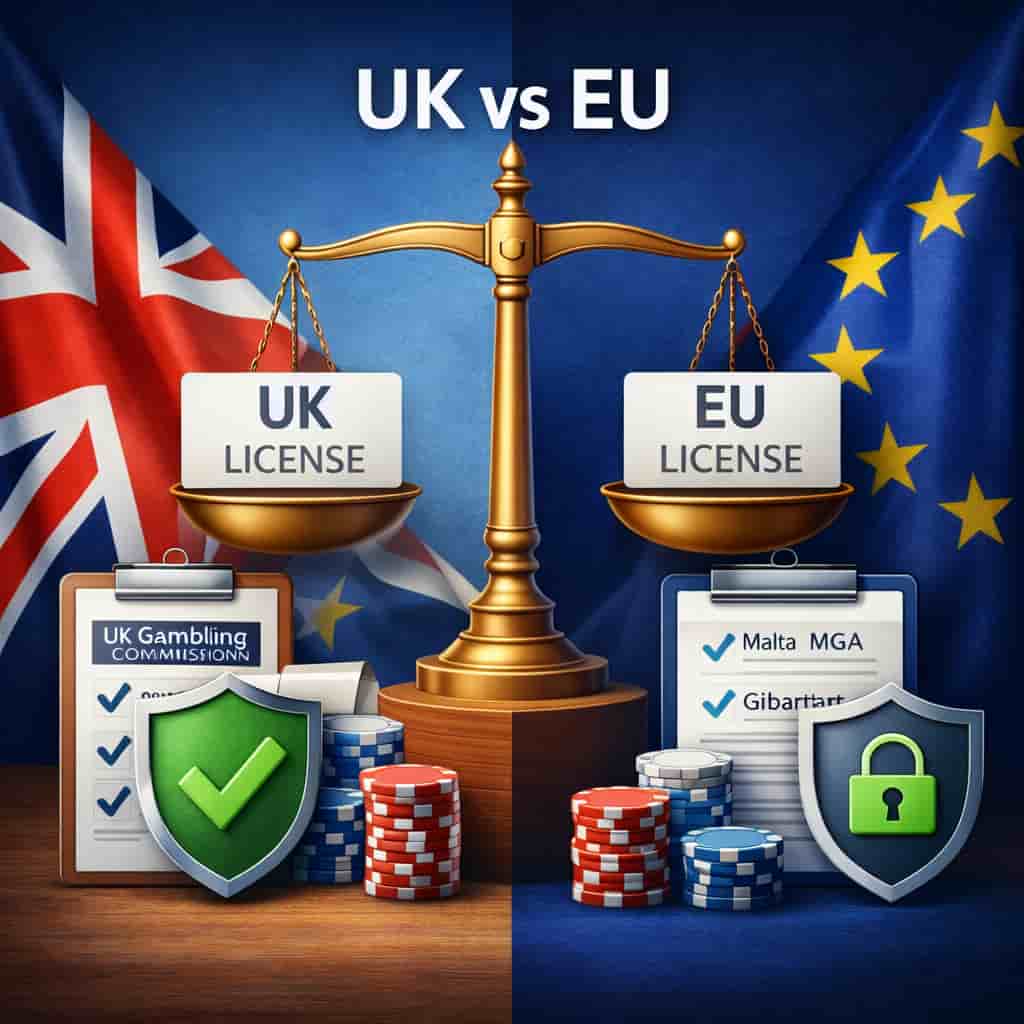
If you play at online casinos or betting sites, the license behind the platform matters more than most people realize. It affects how your money is handled, how disputes are resolved, and how well players are protected when something goes wrong.
For European players, the comparison usually comes down to EU-issued gambling licenses versus UK ones. On paper, both seem reputable. In practice, the differences are real and can directly shape your experience as a player, especially when choosing from the best online EU casinos. Let’s break down what actually separates them and what that means for you.
What Is a UK Gambling License?
A UK gambling license is issued by the UK Gambling Commission (UKGC). It’s widely considered one of the strictest gambling regulators in the world.
Any operator that wants to legally offer gambling services to UK players must hold this license, regardless of where the company is based.
The UKGC focuses heavily on player protection. That includes:
- Strong identity and age verification
- Clear responsible gambling tools
- Strict advertising rules
- Regular audits of operators
From a regulatory perspective, the UK license prioritizes harm prevention and consumer rights over commercial flexibility.
For players, that usually translates into a safer but more controlled gambling environment.
What Is an EU Gambling License?
An “EU gambling license” isn’t a single license. It’s a general term for licenses issued by regulators in the European Union. The most common ones players encounter are from Malta and Gibraltar.
The most well-known authority is the Malta Gaming Authority (MGA). Others include regulators in countries like Estonia or Curaçao, although Curaçao is not part of the EU and sits in a different regulatory tier.
EU regulators aim to balance player protection with market openness. Their rules are solid, but often less restrictive than the UK’s.
For many international casinos, an EU license is the preferred option because it allows access to multiple markets without the heavy compliance burden of the UK.
Player Protection: Where the Biggest Gap Appears
This is where the difference becomes most noticeable.
UK License Protection
UK-licensed sites must follow strict rules designed to reduce gambling harm. These include:
- Mandatory affordability checks for some players
- Deposit limits and loss limits
- Cooling-off periods and self-exclusion schemes
- Participation in the national GamStop self-exclusion program
While these measures protect vulnerable players, they can feel intrusive to others. Some players are asked to provide financial documents or face sudden account restrictions.
EU License Protection
EU-licensed casinos also require identity checks and responsible gambling tools. The difference is in how aggressively those tools are enforced.
- Affordability checks are less common.
- Fewer mandatory limits
- More flexibility in how players manage their accounts
For experienced or high-stakes players, this often feels less restrictive and more private.
Game Selection and Bonuses
Bonuses are another clear dividing line.
UK Sites
UKGC rules heavily limit how bonuses are advertised and structured. You’ll often see:
- Smaller welcome bonuses
- Strict wagering transparency
- Fewer promotional campaigns
Some popular bonus features, like bonus buy slots or certain game mechanics, are restricted or banned.
EU Sites
EU-licensed casinos generally offer:
- Larger welcome bonuses
- Ongoing promotions
- Fewer restrictions on game features
For bonus-focused players, EU platforms are usually more appealing.
Payments, Withdrawals, and Speed
Payment rules differ, too.
UK casinos must follow strict anti-money laundering and source-of-funds requirements. This can lead to:
- More document requests
- Slower withdrawals in some cases
- Payment method restrictions
EU-licensed casinos often provide:
- Faster withdrawals
- More crypto-friendly options
- Fewer checks for low- and mid-level players
That doesn’t mean EU sites are unsafe. It means the balance between security and convenience is set differently.
Dispute Resolution and Trust
When something goes wrong, licensing really matters.
With a UK license, players can escalate disputes to approved Alternative Dispute Resolution (ADR) bodies. The regulator actively enforces rulings and can fine or suspend operators.
EU regulators, like the Malta Gaming Authority, also offer dispute-resolution processes, but enforcement can feel slower or less direct, especially for non-EU players.
That said, top-tier EU casinos usually resolve issues quickly to protect their reputation.
Which License Is Better for Players?
There’s no universal answer. It depends on what kind of player you are.
A UK license is better if you want:
- Maximum consumer protection
- Strong, responsible gambling controls
- Clear regulatory oversight
An EU license may suit you better if you value:
- Bigger bonuses
- Fewer restrictions
- Faster payments and more flexibility
Neither option is inherently “good” or “bad.” They’re designed for different priorities.
The Bottom Line
The real difference between EU and UK gambling licenses isn’t about legitimacy. Both are respected. It’s about philosophy.
The UK focuses on protection first, even if that limits player freedom. EU regulators aim for balance, offering safeguards without tight control.
Before signing up to any gambling site, don’t just look at the games or bonuses. Check the license. It quietly shapes almost every aspect of your player experience.